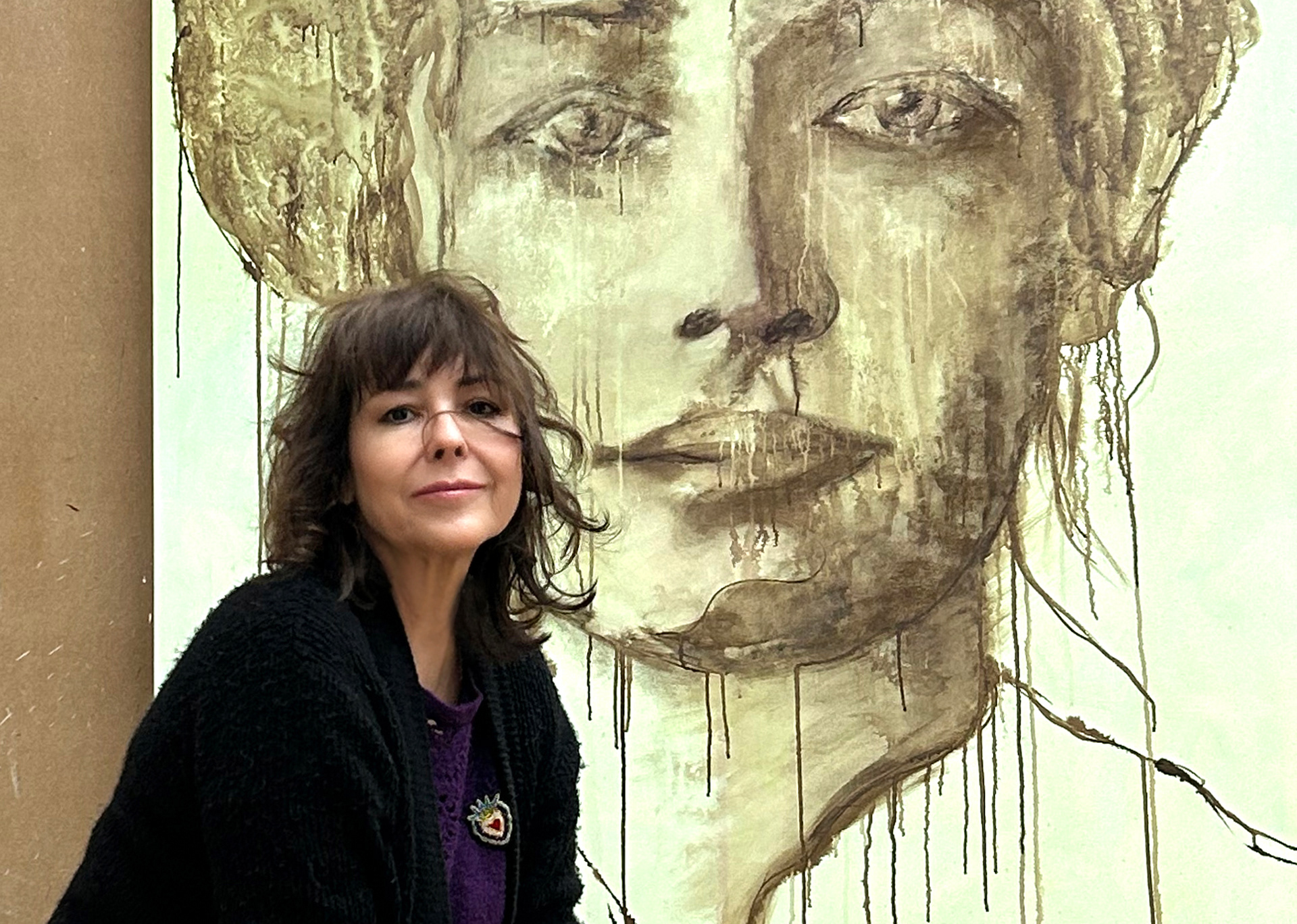
Nicole Bousquet est née à Lodève en 1963. Elle vit et travaille à Nîmes.
L’artiste a mené plusieurs vies — mannequin, directrice de magazine, infographiste, organisatrice d’événements et, longtemps, une autre, plus discrète : celle d’une femme engagée contre les violences faites aux femmes. C’est de là, autant que de l’enfance, que vient sa peinture.
Enfant, elle inventait sur ses toiles des forêts obscures où s’abriter. Puis elle a cessé, et rangé la peinture avec ce qu’elle protégeait. Elle y revient en 2010. Ce qu’elle avait recouvert, elle en fait désormais sa méthode.
Car son geste est l’effacement. Elle superpose, recouvre, ensevelit le motif sous les couches et laisse affleurer ce qui, dessous, refuse de disparaître. Ce n’est pas un procédé : c’est une expérience qu’elle connaît de l’intérieur. Peindre, pour elle, c’est refaire le chemin de ce qu’on efface et de ce qui tient malgré tout.
De série en série, un même sujet revient : le vivant sous la menace de sa disparition. Le visage dans les Portraits, le corps exposé dans les Nus. Toujours la même question : que reste-t-il quand on a tout recouvert ? Entre figuration et expressionnisme, gestuelle directe et palette franche, sa peinture ne console pas. Elle tient. Elle oppose à l’effacement la seule chose qui lui résiste : la persistance de ce qui a été vivant.
En 2023, elle signe l’affiche de la Feria de Nîmes, rejoignant la lignée des artistes internationaux qui l’ont précédée. (avec la première figure féminine représentée en 40 ans d’affiches), rejoignant la lignée des artistes internationaux qui l'ont précédée.Picasso, Bacon, Arroyo, etc.
L’original est visible au musée des cultures taurine de Nîmes.
Nicole Bousquet was born in Lodève in 1963. She lives and works in Nîmes. The artist has led several lives—as a model, magazine director, graphic designer, and event organizer—alongside another, more discreet life: that of a woman committed to fighting violence against women. Her painting stems from this experience just as much as it does from her childhood. As a child, she created dark forests on her canvases where she could take shelter. Later, she stopped painting, setting the art aside along with the things it had protected. She returned to it in 2010. She turned what she had once covered up into her very method. For her artistic gesture is one of erasure. She superimposes, covers, and buries the motif beneath layers, allowing whatever lies beneath—and refuses to vanish—to surface. This is not merely a technique; it is an experience she knows from the inside. For her, painting means retracing the path between what is erased and what endures regardless. From one series to the next, a recurring theme emerges: life under the threat of disappearance. The face in her *Portraits*, the exposed body in her *Nudes*. Always the same question: what remains when everything has been covered over? Hovering between figuration and expressionism, characterized by direct gestures and a bold palette, her painting offers no easy consolation. It holds its ground. Against erasure, it pits the only thing that resists it: the persistence of what was once alive. In 2023, she created the poster for the Nîmes Feria—featuring the first female figure depicted in the event's forty-year poster history—joining the ranks of the international artists who came before her, such as Picasso, Bacon, and Arroyo. The original work is on display at the Museum of Bullfighting Cultures in Nîmes.